
Select Page

Incubators - CO2 Incubator

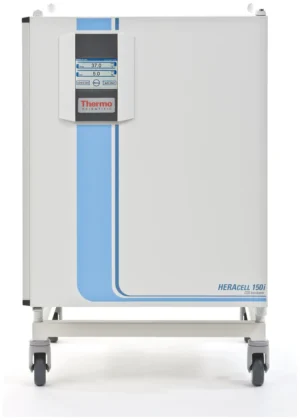
CO2 incubators create controlled environments for cell cultivation under regulated CO2 concentration. They are used in research and diagnostics to optimize cell growth and microbiological applications.

Product

Incubators - CO2 Incubator

CO2 incubators create controlled environments for cell cultivation under regulated CO2 concentration. They are used in research and diagnostics to optimize cell growth and microbiological applications.

Suppliers

The following suppliers offer Incubators - CO2 Incubator products.

Suppliers enabled for requests

You can send a request to the suppliers listed above and save time. Describe your requirements and the request will be forwarded to the selected suppliers. They will contact you with suitable proposals without any obligation.

Highlights

All Highlights

Guide and selection support

CO2 incubators are used for the precise control of temperature, CO2 concentration, and humidity to promote the effective cultivation of cell cultures and microorganisms. They allow for the reproduction of optimal growth conditions, often under sterile circumstances.

Key selection criteria include chamber volume, regulation accuracy for CO2 and temperature, uniformity of the internal environment, and ease of operation. Cleaning and sterilization options also play a role in avoiding contamination.

LabFinder offers a structured overview of CO2 incubators from various manufacturers with detailed technical information, providing users with a sound basis to identify suitable devices for biological and medical laboratories.

Applications and Benefits

CO2 incubators are specifically designed for the cultivation of cell cultures, microorganisms, as well as bacteria and yeasts. By precisely adjusting the CO2 level, temperature, and humidity, a stable microclimate is created that ensures controlled growth and development conditions. These devices are essential in cell biology, microbiology, and medical research to achieve reliable results under reproducible conditions.

Selection Criteria

The choice of a CO2 incubator is based on parameters such as chamber volume and dimensions, regulation accuracy for CO2 concentration and temperature, and uniformly distributed humidity. Additional criteria include ease of use, cleaning, and sterilization methods (e.g., hot air sterilization or UV light). The quality of the sealing mechanism and measurement or sensor technology are also crucial for stable cultivation conditions.

Variants and Measurement Principles

CO2 incubators mainly differ in the type of CO2 control and air exchange. Sensors continuously monitor the CO2 level and temperature to enable automatic adjustments. Variants with forced air circulation or water pans for humidity regulation create varied microclimates depending on the application. Some models feature additional monitoring functions or interfaces for data logging.

Calibration and Maintenance

Regular calibration of CO2 sensors and temperature probes is necessary to ensure precise and reliable readings. Maintenance tasks include cleaning the interior, especially to prevent contamination, and checking all functional components like fans, control electronics, and seals. Documentation of maintenance intervals and calibration procedures is part of quality management in many laboratories.

Limitations of Application

CO2 incubators are optimized for the cultivation of organisms and cell lines whose growth depends on controlled gas and temperature conditions. For applications with special requirements concerning pressure or different gases, other types of incubators or incubation systems are more appropriate. These devices are not designed for the storage of sterile materials or volatile substances, and do not guarantee sterility without regular maintenance and sterilization.

Search Terms and Related Terms

CO2 incubator, CO2 chamber, cell culture incubator, microclimate incubator, temperature and humidity controller, laboratory incubator, CO2 incubation device, controlled growth environment, CO2 cultivation device.

Frequently asked questions

How does a CO2 incubator work?

A CO2 incubator regulates temperature, CO2 concentration, and humidity to create an optimal environment for the growth of cell cultures. Sensors continuously measure the parameters and automatically control heating systems and CO2 supply.

Which cell types can be cultured in a CO2 incubator?

CO2 incubators are suitable for the cultivation of a variety of cell lines derived from animals, plants, microorganisms, and cellular organisms such as bacteria or yeasts that require a controlled environment with CO2.

What should be considered when selecting a CO2 incubator?

Important factors are chamber volume, the precision of CO2 and temperature regulation, environmental uniformity, cleaning options, as well as available documentation and monitoring features.

How often do CO2 incubators need to be calibrated and maintained?

Calibration should be carried out regularly according to the manufacturer's specifications, often at least once a year. Maintenance includes cleaning and functionality checks to avoid contamination and ensure precise control.

What are the limitations of CO2 incubators?

They are not suitable for applications involving gases other than CO2 or without CO2 regulation. Special requirements such as pressure changes or sterile containers often exceed the capabilities of standard CO2 incubators.

For suppliers

Supplier of Incubators - CO2 Incubator?

Present your company on LabFinder and be listed for this product category as well as suitable related categories and brands.

Register as supplier
WordPress Cookie Notice by Real Cookie Banner