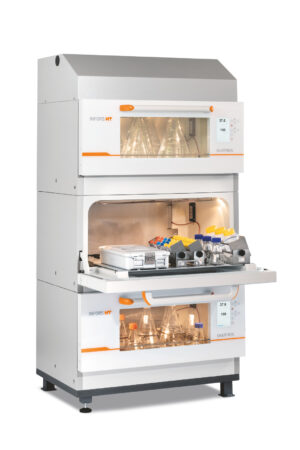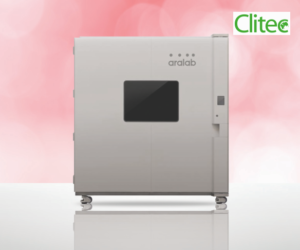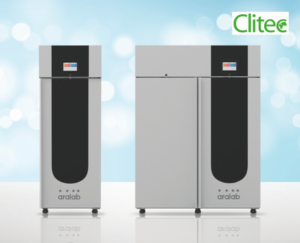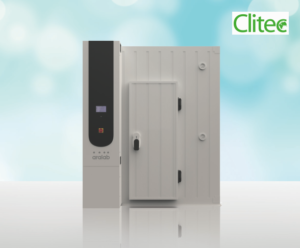

Cooling incubators are incubators with temperature-controlled cooling for cell cultures and microbiological samples. They enable precise microenvironments with regulated temperature and humidity.
The following suppliers offer products in the “Incubators - Cooling incubator” category. Use the overview to compare suitable companies, brands and related product categories and send a direct request.
Send your request to selected suppliers at the same time. They will contact you without obligation with suitable proposals.
Cooling incubators are used for the controlled cultivation and storage of microorganisms, cell and tissue cultures at consistently low temperatures. They are indispensable in microbiology and cell culture when temperatures below room temperature need to be maintained.
Key selection criteria include the temperature range, humidity control, chamber volume, and technical features such as lighting or interior configuration. Good insulation and intuitive operation facilitate everyday laboratory work.
LabFinder provides clear guidance in the search for cooling incubators, with detailed information on application areas, variants, and important selection criteria tailored to your laboratory requirements.
Cooling incubators provide a tightly regulated temperature environment below room temperature and are used to promote or store the growth of microorganisms, cell, and tissue cultures under defined cool conditions. Controlled cooling protects against overheating and stabilizes metabolic processes in microbiology, molecular and cell biology. They also enable short-term or long-term storage of samples and cultures, with temperature and humidity precisely controlled.
The most important factors when choosing a cooling incubator are the required temperature range and temperature accuracy. The interior configuration, chamber volume, and functions such as humidity regulation or forced air circulation are equally important. Depending on the application, features like interior lighting, sterilizable surfaces, or user-friendly touch displays can be relevant. Stable microclimate with low energy consumption is often desired.
Cooling incubators are usually floor-standing units equipped with insulated construction and cooling technology. Cooling is mostly provided electrically by integrated compressors with a refrigerant circuit. Variants differ in their temperature ranges, humidity systems, or programmable controls. Forced air circulation is typically used to ensure homogeneous temperature distribution. Some models offer additional humidity regulation capabilities.
Routine inspection and calibration of temperature and humidity sensors are important for maintaining precise environmental conditions. Maintenance includes cleaning the interior, checking seals and the cooling system, and ensuring the controls work properly. Adherence to manufacturer-recommended intervals and laboratory quality standards must be observed.
Cooling incubators are limited to specific temperature ranges and are not suitable for applications requiring higher flexibility in gas atmospheres or dynamic environmental changes, such as provided by CO2 incubators. They are also unsuitable for freezing applications. Additionally, usage requires sufficient space and appropriate power supply with ambient temperature control.
Cooling incubator, refrigerated incubator, incubator, temperature-controlled incubator, microorganism incubator, cell culture incubator, laboratory incubator, cooling incubator cabinet, low-temperature incubator, incubator with cooling.
A cooling incubator controls the internal temperature via an integrated cooling system, typically with a compressor, to maintain consistently low temperatures for the safe cultivation or storage of biological samples.
There are various types that differ mainly in temperature range, humidity control, and chamber volume. Typical models feature forced air cooling, with or without humidity regulation.
Key factors include the target temperature range, regulation accuracy, available chamber volume, humidity control functions, user convenience, and environmental requirements.
Regular cleaning, checking temperature and humidity sensors, and servicing the cooling system are necessary to ensure consistent performance and accurate environmental conditions.
They are not suitable for cultures requiring specialized gas atmospheres, such as CO2 incubation, and cannot reach freezing temperatures. Operation is also restricted to certain temperature ranges.
Do you offer products or services in the Incubators - Cooling incubator category? Present your company on LabFinder and gain visibility in suitable product categories, brands and enquiries.