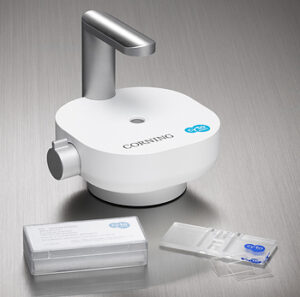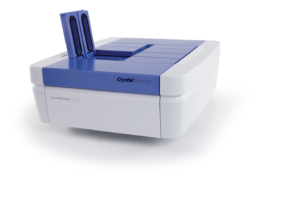

Cytospin centrifuges are used for targeted cell concentration onto microscope slides for laboratory examinations. They enable the preparation of a wide range of liquid samples in clinical and research settings.
The following suppliers offer Centrifuges - Cytospin centrifuge products.
You can send a request to the suppliers listed above and save time. Describe your requirements and the request will be forwarded to the selected suppliers. They will contact you with suitable proposals without any obligation.
Cytospin centrifuges are primarily used in cytopathology, hematology, and microbiology to concentrate cells from liquid samples—such as cerebrospinal fluid, urine, or serous fluids—onto microscope slides. Targeted cell deposition supports subsequent microscopic analysis and diagnostics.
Important selection criteria include rotor design, sample volume, centrifugation speed, and compatibility with various slide formats. Depending on the application area, different models and rotors may be appropriate.
LabFinder facilitates procurement by offering a focused overview for users seeking cytospin centrifuges for cell analysis and preparation in medical laboratories.
Cytospin centrifuges, also known as cyto-centrifuges or cytospins, concentrate cells from liquid samples directly onto microscope slides. This aids in staining and the subsequent microscopic examination of cells. These devices are frequently used in fields such as cytopathology, hematology, microbiology, and biological research. Typical sample types include fine needle aspirates, cerebrospinal fluid, serous and synovial fluids, and urine.
Key factors when choosing a cytospin centrifuge are compatibility with standard slide types, manageable sample volume, and centrifugation speed that ensures efficient cell deposition. Ease of use, rotor options, and ease of maintenance should also be considered. The choice further depends on whether the application is clinical or research-based.
Cytospin centrifuges use a centrifugation process in which cells are precisely deposited from the liquid sample onto a microscope slide. Versions differ primarily in rotor types, capacity, and special holders for various slide formats. These devices are focused on cell biological preparation and do not use additional measurement principles.
Regular maintenance ensures consistently precise operation of the centrifuge. This includes inspecting rotors, checking speed, and cleaning used components. Calibration is typically performed by checking rotational speed and balance. Maintenance intervals recommended by the manufacturer should be followed to ensure device reliability.
Cytospin centrifuges are specifically designed for cell concentration from liquid samples and are not intended for processing large volumes or solid samples. Adjustable centrifugation parameters are optimized for cell concentration—not for general molecular separation. They are also not suited for complete blood analyses or chemical analytics.
Synonyms and related terms include cyto-centrifuge, cytospin, cytocentrifuge, cell concentrator centrifuge, cell slide centrifuge, or slide centrifuge. Important keywords include centrifuge, cytospin, cyto-centrifuge, cell concentration, cytopathology, hematology, microbiology, liquid samples, and cell analysis.
A cytospin centrifuge uses centrifugal force to concentrate cells from a liquid sample directly onto a microscope slide. This enables easy staining and microscopic examination of the cells.
Typical samples include fine needle aspirates, cerebrospinal fluid, serous fluids, synovial fluid, and urine, from which cells are deposited onto slides for analysis.
Crucial factors are compatibility with microscope slides, sample volume, centrifugation speed, rotor options, ease of use, and maintenance-friendliness.
They are primarily used in cytopathology, hematology, microbiology, and biological research for cell preparation and analysis.
These devices are not designed for processing large volumes of liquid or solid samples, nor are they suitable for general chemical or molecular analysis.
Present your company on LabFinder and be listed for this product category as well as suitable related categories and brands.