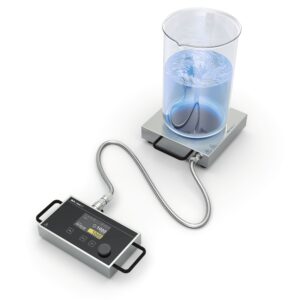

Dosing pumps enable precise and controlled delivery of liquids in laboratories and process engineering. They are essential for accurate liquid dosing in a wide range of applications.
The following suppliers offer Pumps - Dosing pump products.
You can send a request to the suppliers listed above and save time. Describe your requirements and the request will be forwarded to the selected suppliers. They will contact you with suitable proposals without any obligation.
Dosing pumps are used to deliver and dispense defined volumes of liquid with precision. Applications are found in laboratory work, process and chemical engineering, as well as chemical analysis.
Key selection criteria include the required delivery rate, the chemical compatibility of the pump with the media used, and the ability to adjust dosing accuracy. Variants such as diaphragm, piston, and peristaltic pumps differ in design and operating principle.
LabFinder provides a comprehensive overview of dosing pumps across various performance classes and models to help users and purchasers quickly find suitable products for specific dosing needs.
Dosing pumps are used for precise and repeatable delivery of exactly defined liquid volumes. They are utilized in laboratories, chemical process engineering, water treatment, and wherever controlled dosing and liquid transport are critical. Pumps are used to add reagents, media, or additives with precision, or to deliver them continuously.
Important considerations include delivery volume and pressure, properties of the pumped medium (e.g., viscosity, chemical resistance), and the required dosing accuracy. Adjustability of the delivery rate and compatibility of pump materials with the medium are also crucial. Peristaltic pumps are often suitable for less aggressive liquids, while diaphragm or piston dosing pumps are preferred for chemically demanding substances.
Dosing pumps are typically reciprocating positive displacement pumps, where either a piston or diaphragm draws in and expels liquid. The most common types are diaphragm dosing pumps, well suited for precise volume metering; piston dosing pumps, capable of generating high pressures; and peristaltic pumps (also called tube pumps), which operate without media-contacting seals and are suitable for sensitive or aggressive fluids.
To ensure lasting dosing accuracy, regular calibration is essential. This is done by comparing the dispensed liquid volume with a reference volume. Maintenance depends on pump type and includes replacing wear parts such as membranes, seals, or tubing. Routine inspections help prevent failures in critical applications.
Dosing pumps are designed for precisely defined liquid volumes, but highly abrasive or very viscous media, as well as solid particles in the medium, can cause problems. Not all dosing pumps are suitable for sterile or pharmaceutical use. Some applications may require integration with flow or pressure measuring devices for monitoring and control.
Dosing pump, precision pump, laboratory dosing pump, diaphragm dosing pump, piston dosing pump, peristaltic pump, tube pump, liquid metering, liquid delivery, dosing unit, dosing apparatus, pump technology, dosing accuracy, delivery volume
Dosing pumps deliver liquids with volumetric precision by means of reciprocating positive displacement mechanisms, such as pistons or diaphragms. During the suction stroke, liquid is drawn in and then, during the pressure stroke, it is pushed into the dosing line.
Common types include diaphragm dosing pumps, piston dosing pumps, and peristaltic pumps. They differ in construction and delivery method, making them suitable for different media and requirements.
Important factors are the delivery rate and pressure, chemical compatibility with the medium, required dosing accuracy, and the adjustability and compatibility of pump materials.
Dosing accuracy is checked by calibration, comparing the delivered volume with a defined reference volume. Regular calibration and maintenance ensure consistent precision.
Dosing pumps are suitable for clean, liquid media without solid particles. High viscosity, abrasive media, or the presence of solids can affect pump operation. They are also not always suitable for sterile applications.
Present your company on LabFinder and be listed for this product category as well as suitable related categories and brands.