
Select Page

Centrifuges - High speed centrifuge

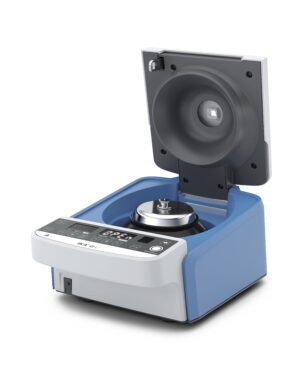
High speed centrifuges enable rapid and effective sample preparation through high rotational speeds. They are designed for precise separations in analytical workflows.

Product

Centrifuges - High speed centrifuge

High speed centrifuges enable rapid and effective sample preparation through high rotational speeds. They are designed for precise separations in analytical workflows.

Suppliers

The following suppliers offer Centrifuges - High speed centrifuge products.

Suppliers enabled for requests

You can send a request to the suppliers listed above and save time. Describe your requirements and the request will be forwarded to the selected suppliers. They will contact you with suitable proposals without any obligation.

Highlights

All Highlights

Guide and selection support

High speed centrifuges are used to quickly and efficiently separate liquid samples by centrifugation at high rotational speeds. This supports a variety of applications in laboratory analytics and sample preparation.

Key selection criteria include maximum speed, rotor options, volume capacities, and compatibility with different sample types. Ease of use and safety features are also important.

LabFinder provides users with tailored guidance for choosing suitable high speed centrifuges, based on technical specifications and intended applications. This helps users find the right equipment for their laboratory operations quickly.

Application and Benefits

High speed centrifuges are designed for rapid and controlled processing and separation of various types of samples in the laboratory. Thanks to high rotational speeds, particles can be differentiated according to their density and size. They are indispensable in biochemistry, molecular biology, microbiology, and environmental analysis for sample preparation, cell fractionation, or clarification of suspensions.

Selection Criteria

When selecting a high speed centrifuge, the main factors are the maximum speed and, consequently, the achievable centrifugal force. Other important aspects include the rotor's capacity, compatibility with various rotor types and tube sizes, the ability to control speed and temperature, as well as considerations such as user comfort, noise level, and safety mechanisms.

Variants and Measurement Principles

High speed centrifuges are mainly distinguished by rotor type (fixed-angle or swinging bucket) and by the speeds that can be achieved. The separation principle is based on the physical effect of centrifugal force, which separates particles or molecules in suspension according to density differences. These devices are typically available as benchtop or floor models.

Calibration and Maintenance

Regular maintenance includes checking rotors for damage as well as calibrating speed settings. Proper cleaning and care contribute to the longevity of the devices and prevent contamination. For professional use, manufacturer guidelines for maintenance intervals should be observed.

Limitations in Application

High speed centrifuges are not suitable for all sample types; for example, extremely small or very dense particles may require alternative separation techniques or more extreme conditions as in ultracentrifuges. They are also subject to volume and temperature limitations that may restrict their use.

Search Terms and Related Terms

Synonyms and related terms include high speed centrifuge, rapid centrifuge, laboratory centrifuge high speed, high-speed centrifuge, centrifuges high speed, as well as high-revolution centrifuge. Important keywords for searching are centrifuge, speed, rotor, sample preparation, separation, and centrifugation.

Frequently asked questions

How does a high speed centrifuge work?

A high speed centrifuge generates centrifugal force through rapid rotation, which separates particles in liquids according to their density. Different components either sediment or remain in suspension, enabling targeted sample preparation.

What types of rotors are used in high speed centrifuges?

Main distinctions are between fixed-angle rotors, where sample tubes are held at a fixed angle, and swinging bucket rotors, which move into a horizontal position during rotation. The choice depends on the sample type and the separation goal.

What criteria are important when selecting a high speed centrifuge?

Key criteria include maximum speed and centrifugal force, rotor options, sample volume, temperature control, user-friendliness, and safety features. The sample type and intended separation method also influence the choice.

How should a high speed centrifuge be maintained?

Maintenance involves regular cleaning, checking rotors for damage, calibrating speed sensors, and following manufacturer guidelines. Proper handling and storage extend the instrument’s service life.

What are the limitations when using high speed centrifuges?

They are often not suitable for very small particles or extremely dense materials, as these may require ultracentrifuges. There are also limitations regarding sample volume, temperature, and separation type.

For suppliers

Supplier of Centrifuges - High speed centrifuge?

Present your company on LabFinder and be listed for this product category as well as suitable related categories and brands.

Register as supplier
WordPress Cookie Notice by Real Cookie Banner