
Select Page

Spray dryer

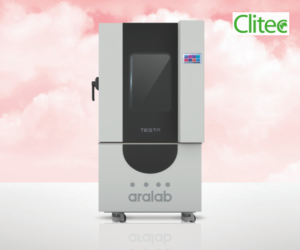
Spray dryers are used for the rapid drying of solutions, suspensions and emulsions by atomizing them in a hot gas stream. They convert liquid samples into fine powders.

Product

Spray dryer

Spray dryers are used for the rapid drying of solutions, suspensions and emulsions by atomizing them in a hot gas stream. They convert liquid samples into fine powders.

Suppliers

The following suppliers offer Spray dryer products.

Suppliers enabled for requests

You can send a request to the suppliers listed above and save time. Describe your requirements and the request will be forwarded to the selected suppliers. They will contact you with suitable proposals without any obligation.

Highlights

All Highlights

Guide and selection support

Spray dryers are employed in laboratories and process engineering for drying liquids such as solutions or suspensions. The drying process involves atomizing the moist material into a warm gas stream, resulting in a dry powder within a short time. When choosing a spray dryer, process parameters such as temperature range, throughput capacity, and particle size of the powder are crucial. Compatibility with the substances to be dried, as well as aspects of cleaning and maintenance, are also important. LabFinder assists in the selection and search for suitable spray dryers by making product information and technical details readily accessible. This allows users to quickly find the appropriate equipment for various drying requirements in laboratory and research settings.

Application and Benefits

Spray dryers are technical devices used for the fast and efficient drying of liquid samples in laboratories and industrial environments. The devices atomize solutions, suspensions or emulsions into fine droplets that are processed into a dry powder within seconds or fractions thereof in a hot gas stream. Spray drying allows sensitive substances to be dried gently and homogeneously, which is relevant in pharmaceuticals, chemistry, food technology, and environmental analysis.

Selection Criteria

Important criteria when selecting a spray dryer include the type and properties of the samples to be dried, the required degree of drying, temperature resistance, and the desired particle size of the final product. The type of atomization used (e.g. air atomization, rotary spray drying), the volume throughput, the dryer volume, and cleaning options also play a role. Suitable device selection also considers integration into existing process flows and ease of operation.

Variants and Measuring Principles

Spray dryers can be differentiated based on the type of atomization, such as using compressed air atomizers or rotary atomizers. The basic principle is the conversion of a liquid into fine droplets that evaporate in a stream of warm air. This process is accompanied by physical phase separation and powder formation. The choice of atomization technique affects efficiency and particle size.

Calibration and Maintenance

Regular maintenance of spray dryers includes cleaning the containers and nozzles, checking the temperature settings and seals, and functional control of the atomization systems. Conventional calibration is not strictly necessary, but monitoring process parameters is essential for reproducible results and consistent powder quality. Technical documentation supports proper upkeep of the devices.

Limitations of Use

Spray dryers are not suitable for all materials, for example if high temperatures adversely affect material properties or if the sample is highly thermolabile. Drying certain highly viscous or very sensitive products can be challenging. Additionally, spray dryers are not suitable for the drying of solid materials; other methods are used to meet those requirements.

Search Terms and Related Terms

Synonyms and related terms include spray drying device, atomization dryer, spray drier, atomizer dryer, spray device drying, laboratory spray dryer, spray drying system, dryer spray system and spray dried product. Keywords include spray drying, powder drying, process engineering drying, solution drying, suspension drying, atomization drying, and hot gas stream drying.

Also known as

spray drying device atomization dryer spray drier spray-dried product spray device drying spray drying system laboratory spray dryer spray dryer apparatus atomizer device dryer spray system

Frequently asked questions

How does a spray dryer work?

A spray dryer atomizes a liquid sample into very fine droplets using an atomizer. These droplets are rapidly dried in a stream of hot gas and form a powder.

Which types of samples are suitable for spray drying?

Spray dryers are suitable for drying solutions, suspensions, and emulsions, which can be gently and homogeneously converted into powder form by spray drying.

What parameters should be considered when selecting a spray dryer?

Key factors include temperature range, type of atomization, throughput capacity, particle size of the powder, compatibility with the sample, and cleaning options.

What variants of spray dryers are there?

Common variants differ in atomization technology, such as compressed air atomizers or rotary atomizers, which influence efficiency and particle characteristics.

When is the application of a spray dryer limited?

Spray drying is usually not suitable for highly temperature-sensitive substances, highly viscous solutions, or solid materials.

For suppliers

Supplier of Spray dryer?

Present your company on LabFinder and be listed for this product category as well as suitable related categories and brands.

Register as supplier
WordPress Cookie Notice by Real Cookie Banner