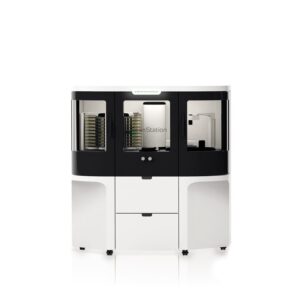

Systems for immunoassays enable the automated execution of specific immunological tests. They are used for biomarker analysis in research and diagnostics.
The following suppliers offer products in the “Systems for immunoassays” category. Use the overview to compare suitable companies, brands and related product categories and send a direct request.
Send your request to selected suppliers at the same time. They will contact you without obligation with suitable proposals.
Systems for immunoassays serve for the quantitative and qualitative determination of specific molecules using immunological reactions. They are applied in research, clinical settings, and quality control.
The selection of a suitable system depends on factors such as detection principle, degree of automation, throughput, and compatibility with existing laboratory workflows. Accuracy and ease of use are also important criteria.
LabFinder offers you a clear overview of available systems and supports you in targeted searches for suitable immunoassay laboratory equipment, tailored to your requirements and fields of application.
Systems for immunoassays are used for the specific identification and quantification of antigens or antibodies. In the laboratory, they support diagnostics, research, and process control by enabling automatic or semi-automatic execution of immunological tests. Common applications include hormone determinations, infectious disease diagnostics, and environmental analysis.
Key selection criteria include the underlying detection principle (e.g., enzyme immunoassay, chemiluminescence), level of automation, sample throughput, and flexibility for different assay formats. Additional functionalities, such as integration with laboratory information systems or compatibility with automated sample preparation systems, may also be relevant.
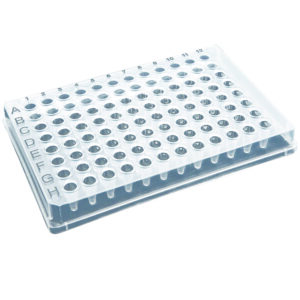
Immunoassay systems are commonly based on methods such as ELISA (Enzyme-linked Immunosorbent Assay), chemiluminescence immunoassay, or fluorescence immunoassay. Variants include manual, semi-automatic, and fully automated systems with different plate sizes and multiplexing capabilities.
Regular calibration and maintenance are crucial for obtaining accurate measurement results. The systems often require periodic checks of reagents, cleaning of detection modules, and validation of assays. Manufacturer guidelines for care should be observed to maintain system functionality.
Immunoassay systems are specialized for immunological detection principles and are not suitable for all types of analyses. They can be affected by cross-reactions or matrix effects. The quality of the reagents used and strict adherence to protocols are moreover essential for reliable results.
Relevant search terms include immunoassay, immunoassay systems, immunoassay analyzers, ELISA systems, automated immunoassay, immunotest systems, and immunoassay diagnostics.
Immunoassay systems use the specific binding between antigens and antibodies to detect or quantify target molecules, typically via enzymatic, chemiluminescent, or fluorescent signals.
There are manual, semi-automatic, and fully automated systems, employing various detection methods such as ELISA, chemiluminescent immunoassays, or fluorescence immunoassays.
Important factors include detection principle, degree of automation, sample throughput, compatibility with existing laboratory workflows, as well as requirements for flexibility and accuracy.
Main applications include clinical diagnostics, biomedical research, environmental analysis, and quality control through the specific detection of biomarkers.
They are restricted to immunological detection methods and may be affected by cross-reactions. Careful calibration and quality control are essential for reliable results.
Do you offer products or services in the Systems for immunoassays category? Present your company on LabFinder and gain visibility in suitable product categories, brands and enquiries.