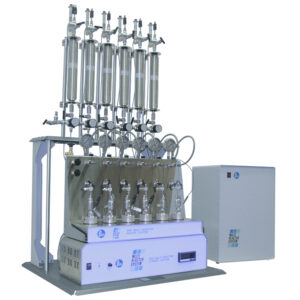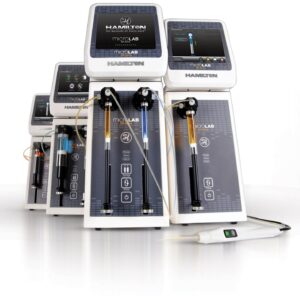

Systems for plasma protein analysis are used for precise quantification and characterization of plasma proteins in clinical samples. They support both diagnostics and research in the field of blood plasma protein analytics.
The following suppliers offer Systems for plasma protein analysis products.
No suppliers found.
You can send a request to the suppliers listed above and save time. Describe your requirements and the request will be forwarded to the selected suppliers. They will contact you with suitable proposals without any obligation.
Systems for plasma protein analysis are utilized in clinical laboratories and research institutions to determine proteins in blood plasma, providing important insights into health status. The choice of suitable systems depends on the measuring principle, degree of automation, sample throughput, as well as accuracy and application area. LabFinder offers a clear overview and the ability to compare various plasma protein analysis systems, helping users find suitable products quickly and request quotes.
Systems for plasma protein analysis are used to determine proteins in blood plasma quantitatively and qualitatively. These analyses are central to clinical diagnostics, for example, to detect inflammation, immune disorders, or other conditions that are reflected in the plasma protein profile. In addition to routine diagnostics, they are also used in biomedical research.
When selecting systems for plasma protein analysis, various factors should be considered: these include the measurement principle (e.g., nephelometry, turbidimetry), automation and integration into laboratory workflows, sample throughput, and the required analytical precision. User-friendliness and compatibility with existing laboratory infrastructure are also important.
The common systems for plasma protein analysis are often based on optical measurement methods such as nephelometry or turbidimetry, in which protein-antibody complexes are formed, sedimented, and measured. Alternatively, electrophoretic methods can be used to separate and quantify proteins. The choice of system depends on the application and sample type.
To ensure reliable measurement results, systems for plasma protein analysis require regular calibration with appropriate standards and routine maintenance of the measuring equipment. Manufacturer instructions must be followed to guarantee measurement accuracy and device functionality. Service and maintenance intervals should be strictly observed.
The analysis of plasma proteins can be limited by factors such as sample quality or interferences. The choice of measurement principle also determines which protein types and concentration ranges can be reliably detected. Systems for plasma protein analysis are not general blood test solutions, but are intended for specific diagnostic questions.
Synonyms and related search terms include plasma protein analysis systems, plasma protein assay systems, protein analytical systems, plasma protein analyzers, as well as protein tests. Terms such as clinical diagnostics, protein analytics, and plasma analysis are also relevant for laboratory searches.
These systems typically measure plasma proteins using optical methods such as nephelometry or turbidimetry, in which protein-antibody complexes are formed and detected. Other approaches use electrophoretic separation for quantification.
Mainly, there are optical measurement systems, such as nephelometers and turbidimeters, and electrophoretic systems for protein separation and analysis. Automated and manual variants differ in user-friendliness and sample throughput.
Important criteria include the measurement principle, accuracy, degree of automation, throughput, compatibility with laboratory processes, and maintenance requirements. The choice depends on the application area and the proteins to be analyzed.
Regular calibration with suitable standards is essential for reliable results. Maintenance intervals depend on the device type and should be observed according to manufacturer specifications.
Analyses depend on sample quality and potential interferences. Not all plasma proteins are equally detectable by every system, and these methods are designed for specific diagnostic questions.
Present your company on LabFinder and be listed for this product category as well as suitable related categories and brands.