
Select Page

Titrator station

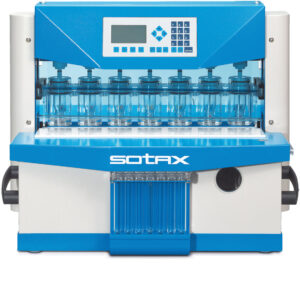
Titrator stations are devices for the volumetric determination of chemical concentrations. They comprise all components required for titration, such as burette and magnetic stirrer.

Product

Titrator station

Titrator stations are devices for the volumetric determination of chemical concentrations. They comprise all components required for titration, such as burette and magnetic stirrer.

Suppliers

The following suppliers offer Titrator station products.

Suppliers enabled for requests

You can send a request to the suppliers listed above and save time. Describe your requirements and the request will be forwarded to the selected suppliers. They will contact you with suitable proposals without any obligation.

Highlights

All Highlights

Guide and selection support

Titrator stations are used in chemical analysis for the precise determination of unknown substance concentrations by means of titrimetric analysis. In this process, sample solution and titrant react in a controlled procedure.
When choosing a titrator station, factors such as the degree of automation, component compatibility, and user convenience are important. The type of titration and the required volume of titrant also play a role.
LabFinder supports your orientation in the area of titrator stations with objective descriptions, an overview of variants, and technical details to help you find precisely suitable systems for laboratory and research needs.

Applications and Benefits

A titrator station is used for the quantitative analysis of samples through titration, also known as titrimetric analysis. This technique is based on a chemical reaction between a sample solution and a titrant of accurately known concentration. The measured volume of the titrant allows the calculation of the target substance's concentration using stoichiometry. Titrator stations are applied in chemical laboratories, quality assurance, and research wherever precise concentration determinations are essential.

Selection Criteria

Key selection criteria for a titrator station include the degree of automation (manual, semi-, or fully-automatic), the capacity and precision of the burette, and compatibility with various magnetic stirrers and Erlenmeyer flasks. Other important aspects are ease of use, maintenance effort, and potential extensions for different titration types or measurement tasks.

Variants and Measurement Principles

Titration systems mainly differ in their level of automation. Manual titrator stations typically include a burette, magnetic stirrer, Erlenmeyer flask, and appropriate holders. Automated titrators handle dosing, stirring, and measurement digitally. The measurement principles are mostly based on volumetric analysis, where the consumed volume of titrant is recorded directly. Options such as potentiometry or photometry can be added as enhancements.

Calibration and Maintenance

Regular calibration of the burette and checking the flow rate of the titrant are essential for accurate measurement results. Magnetic stirrers should be inspected for malfunctions, and Erlenmeyer flasks should be maintained to avoid contamination. Maintenance also includes cleaning the components and, if needed, replacing gaskets or other wear parts.

Limitations of Use

Titration is suitable above all for samples with clearly defined reactants whose concentrations can be determined via titrant volume. For complex or multiphase systems and very low concentrations, other analytical methods are often more suitable. Titration also requires careful handling and experience to ensure reproducible results.

Search Terms and Related Terms

Synonyms and search terms related to titrator stations include: titration station, titrator, volumetric analysis, titrimetric analysis, titration device, titration apparatus, burette, magnetic stirrer, Erlenmeyer flask, chemical titrator station, and titration set.

Also known as

Titrator stations Titration station Titrator station manual Volumetric analysis station Titration system Titration apparatus Titration instrument Titration equipment Volumetric titrator station Laboratory titrator station

Frequently asked questions

What is a titrator station and what is it used for?

A titrator station is an assembly of components such as burette, magnetic stirrer, and Erlenmeyer flask for performing titrations, enabling the determination of concentrations of unknown substances in a sample.

What types of titrator stations are available on the market?

Basically, there are manual titrator stations and automated titrators. Manual systems consist of individual components, while automated instruments provide electronic control of dosing and measurement.

What criteria are important when selecting a titrator station?

Essential selection criteria include the level of automation, measurement accuracy, component compatibility, user comfort, and options for maintenance and calibration.

How is a titrator station properly calibrated and maintained?

The burette is regularly inspected for volumetric and dispensing accuracy, the magnetic stirrer is checked, and device components are cleaned. Wear parts should be replaced as needed.

What are the limitations of using a titrator station?

Titrator stations are suitable for chemically defined reactions. In the case of complex samples or very low concentrations, their capabilities are limited and alternative analytical methods may be more suitable.

For suppliers

Supplier of Titrator station?

Present your company on LabFinder and be listed for this product category as well as suitable related categories and brands.

Register as supplier
WordPress Cookie Notice by Real Cookie Banner