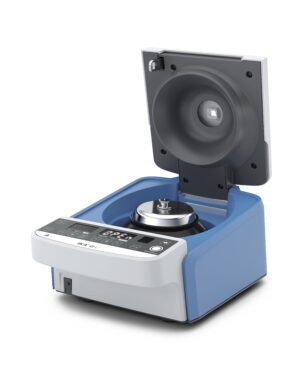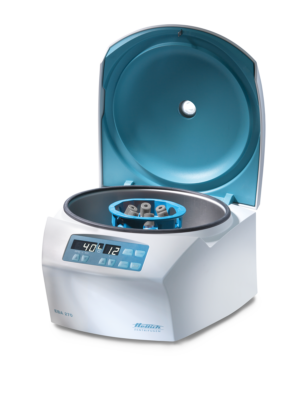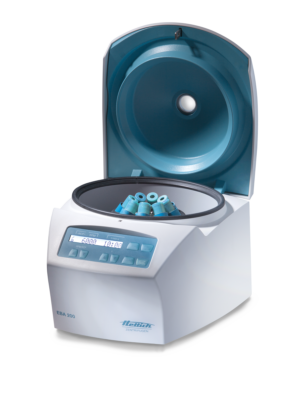

Centrifuges separate laboratory samples by density differences. They are essential for sample preparation across various scientific fields.
The following suppliers offer Centrifuges - Centrifuges general products.
You can send a request to the suppliers listed above and save time. Describe your requirements and the request will be forwarded to the selected suppliers. They will contact you with suitable proposals without any obligation.
Centrifuges are used in laboratories to separate liquid mixtures into their constituents by rotation, for example, to sediment cells from blood samples. Selection is based on parameters such as rotor design, speed, cooling capability, and sample type. LabFinder assists in quickly identifying and choosing suitable centrifuges for a variety of laboratory applications.
Centrifuges provide fast and efficient separation of heterogeneous mixtures, typically in liquid form, based on the density differences of their components. Common applications are found in medical diagnostics, molecular biology, and biochemical research, for example for the separation of plasma, serum, or cell fractions. They enable standardized sample preparation for subsequent analytical procedures.
Key criteria when selecting a centrifuge include maximum speed or relative centrifugal force (RCF), rotor size and type, and the sample holding capacity. Additional aspects include temperature control features (cooling) and safety properties to prevent biological contamination. The configuration is always determined by the intended application and the sample volumes to be processed.
Centrifuges primarily differ by rotor type (swing-out, fixed-angle, angle rotors) and by additional features such as cooling or ventilation. While the core function is separation by centrifugal force, different rotors and programs allow adaptation to specific sample types and separation goals. Variants range from small benchtop centrifuges to larger floor-standing units for higher sample volumes.
Regular maintenance and functional checks are essential for reliable centrifuge performance. The rotor, bearings, and motor should be inspected for wear or damage. Calibration typically concerns speed and temperature control to ensure consistent, reproducible results. Manufacturer specifications provide guidance on intervals and procedures.
Centrifuges are designed to separate samples with different densities but lose efficiency with very small particles or those with similar densities. These devices are not suitable for explosive or corrosive liquids without special precautions. Proper sample loading is essential: improper loading or overfilling can cause malfunction or sample loss.
Relevant synonyms and search terms include: centrifuge, laboratory centrifuge, sample centrifuge, rotational centrifuge, centrifugation device, blood separation, plasma separation, laboratory equipment.
A centrifuge uses the centrifugal force generated by rotation to separate sample components of different densities, pushing heavier parts outward.
Centrifuges are mainly distinguished by rotor type, such as swing-out rotor, fixed-angle rotor, or angle rotor, as well as by special features like cooling or ventilation.
Key criteria are maximum speed/RCF, capacity, rotor type, available cooling options, and safety features, depending on the sample types and intended application.
Samples must be loaded properly and balanced to prevent device errors. Temperature requirements and contamination risk also influence the choice and settings of the centrifuge.
Centrifuges are not suitable for separating very small particles with similar densities or for handling highly reactive, contaminating, or explosive substances without special equipment.
Present your company on LabFinder and be listed for this product category as well as suitable related categories and brands.