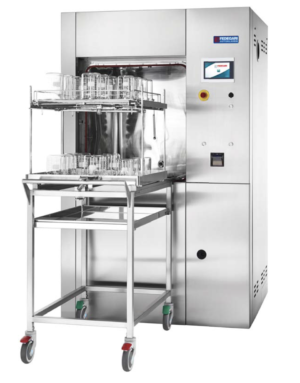

Cleaning devices are automated systems designed for efficient cleaning of laboratory equipment and instruments. They ensure consistent cleaning quality and relieve personnel through time-saving processes.
The following suppliers offer Cleaning device products. Use the overview to compare suitable companies, brands and related product categories and send a direct request.
You can send a request to the suppliers listed above and save time. Describe your requirements and the request will be forwarded to the selected suppliers. They will contact you with suitable proposals without any obligation.
Cleaning devices are used in laboratories across various disciplines to reliably and standardize the cleaning of items such as glassware, pipettes, and other utensils. They help prevent contamination from residues and ensure laboratory hygiene.
When selecting a cleaning device, important factors include cleaning programs, capacity, compatibility with different laboratory equipment, and ease of operation. Other key aspects are required footprint and integration into existing laboratory environments.
LabFinder provides you with a structured overview of cleaning devices so you can quickly orient yourself and compare solutions. This enables you to find devices tailored to your specific cleaning needs and laboratory requirements.
Cleaning devices serve the purpose of automated cleaning of laboratory equipment and utensils. Their use reduces manual cleaning workload, minimizes sources of error, and provides reproducible cleaning results. This supports consistent laboratory hygiene and minimizes contamination risks. They are typically used in clinical laboratories, research facilities, as well as quality control for industry and environmental analysis.
When selecting a cleaning device, several criteria should be considered. These include the type and quantity of laboratory ware to be cleaned, the available cleaning programs and their flexibility, user-friendliness, and capacity. Compatibility with common laboratory materials and cleaning agents, as well as optimization of energy and water consumption, are additional important factors. Unit size and ergonomic features also play a role.
Cleaning devices mainly differ in their designs and technologies employed. Standard types include benchtop and freestanding units with various baskets or racks for specific laboratory utensils. Cleaning is generally achieved via spray nozzles that deliver water and detergents, combined with temperature and time controls. Some models offer precisely programmable routines for different contamination levels.
Regular maintenance and cleaning of the unit’s components are vital to ensure sustained cleaning performance. This involves checking and cleaning nozzles, filters, and water connections. Classic calibration is not required for cleaning devices; however, cleaning parameters and process routines should be regularly monitored and documented to ensure optimal results.
For items that are heavily soiled or particularly sensitive, manual pre-treatment may be necessary for optimal cleaning results. Not all laboratory items are suitable for machine cleaning, especially some plastic materials or delicate measuring instruments. Additionally, cleaning devices do not replace sterilization, which is carried out using specific procedures for various types of equipment.
Synonyms and related keywords include cleaning instruments, laboratory cleaners, dishwashing units, automated cleaning systems, laboratory washers, device washers, laboratory dishwashers, cleaning processes, laboratory hygiene, and cleaning equipment.
A cleaning device washes laboratory equipment through automated rinsing, where water and cleaning agents are sprayed onto the items via nozzles. Temperature and timing controls ensure effective removal of residues.
In laboratories, benchtop and freestanding models are common, offering suitable racks and cleaning programs for different device types and sizes.
Relevant selection criteria include capacity, compatibility with laboratory equipment, available cleaning cycles, ease of operation, as well as space and consumption parameters.
Regular cleaning of nozzles and filters as well as checking water connections is important. Calibration is not required, but the cleaning process should be documented and controlled.
Not all laboratory items are suitable for machine cleaning, especially sensitive materials. Also, cleaning does not replace necessary sterilization.
Present your company on LabFinder and be listed for this product category as well as suitable related categories and brands.