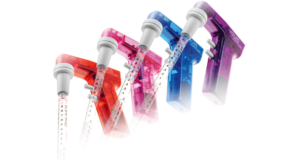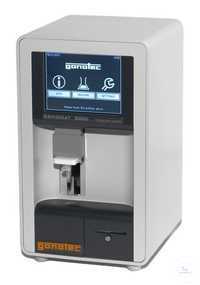

Adhesion testers measure the adhesive strength of coatings using tensile force. They are used in material testing to evaluate coating systems.
The following suppliers offer Adhesion tester products.
You can send a request to the suppliers listed above and save time. Describe your requirements and the request will be forwarded to the selected suppliers. They will contact you with suitable proposals without any obligation.
Adhesion testers are used to determine the force required to detach a coating from its substrate. These devices are specifically designed for the mechanical testing of adhesion strength in quality assurance and research and development.
Key factors in selecting an adhesion tester include the test range of tensile force, automation level, sensor technology, and whether mobile or stationary measurements are needed. Compatibility with the test specimen and user-friendliness are also important.
LabFinder provides an overview of various adhesion testers with detailed technical specifications to help users source suitable testing devices for laboratory or industrial applications.
Adhesion testers are used to determine the adhesion strength of coatings, paints, films, or adhesives to their substrates. The device measures the tensile force needed to deliberately detach the coated area from the underlying material. These tests are essential in material development, quality assurance, and process control.
Important selection criteria include the available measuring range (usually from a few newtons up to several kilonewtons), measurement accuracy, and the specimen holding method. The drive type (e.g., hydraulic or electric), degree of automation, and interfaces for data acquisition are also relevant. It is also crucial to decide whether the instrument should be mobile or permanently installed.
Adhesion testers typically apply tensile force using hydraulic or electromechanical systems. Measurement is conducted via pressure or tensile sensors that capture the force during the detachment process. Variants differ in test area size, control (manual or automated), and extra functions such as programmable test cycles.
To ensure precise and reproducible measurement results, regular calibration of the force sensors is necessary. Maintenance includes checks of hydraulic systems, sensor functionality, and mechanical components. Manufacturer instructions for calibration and maintenance should be followed.
Adhesion testers are specifically designed for testing adhesive strength on coated surfaces and are less suited for dynamic or very small samples. Results depend heavily on sample preparation and testing conditions, so standardized testing methods are needed for comparability.
Synonyms and keywords include adhesion force tester, adhesion tester, adhesion test device, tack tester, adhesion strength tester, tensile force measurement, coating testing, adhesion measurement, adhesion test, and adhesion checking.
An adhesion tester measures the force required to detach a defined area of a coating from its substrate. The tensile force is usually generated hydraulically or electromechanically and recorded by a force sensor.
There are mainly hydraulic and electromechanical adhesion testers. They further differ in test area size, automation, and measurement range.
Relevant criteria include the tensile force measurement range, type of specimen holder, degree of automation, mobility, and data acquisition interfaces.
They are used in material testing, quality assurance, and research, for example with coatings, paints, and adhesives.
Measurements are highly dependent on sample preparation and testing conditions. Very small samples or dynamic adhesion can only be tested to a limited extent.
Present your company on LabFinder and be listed for this product category as well as suitable related categories and brands.