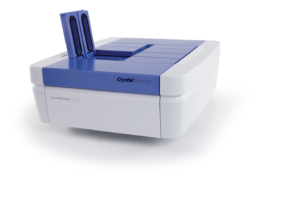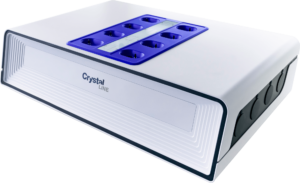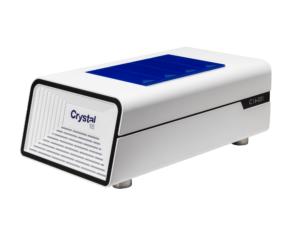

Automated in-situ analysis reactors enable direct and continuous measurement of chemical and physical parameters within reaction processes. They are an integral part of process analytics for real-time monitoring and control in laboratories and production.
The following suppliers offer Reactors - Automated in-situ analysis reactor products. Use the overview to compare suitable companies, brands and related product categories and send a direct request.
You can send a request to the suppliers listed above and save time. Describe your requirements and the request will be forwarded to the selected suppliers. They will contact you with suitable proposals without any obligation.
Automated in-situ analysis reactors are used for real-time monitoring of reaction processes, particularly for analyzing crystallization, nucleation, polymorphism, and other chemical-physical changes. They support process development and scale-up through continuous measurements without the need for sample extraction.
Key selection factors include compatible measurement principles, degree of automation, integration into existing process systems, and suitability for specific analytical parameters. Maintenance effort and calibration options are also important.
LabFinder offers a specialized overview of product variants of automated in-situ analysis reactors, facilitating targeted procurement of suitable systems for analytical tasks in research, quality assurance, and process development.
Automated in-situ analysis reactors are used for the direct and continuous monitoring of chemical and physical process parameters within reactor vessels. Typical areas of use include process analytics in chemistry, pharmacology, and materials development, especially for observing crystallization, saturation, nucleation, and polymorphism. Real-time measurement enables improved process control and helps optimize manufacturing steps.
When selecting a system, it is important to consider which parameters need to be measured and which measurement principles (such as Raman spectroscopy) are to be used. Other decisive factors include the level of automation, compatibility with existing reactor systems, user convenience, and options for integration into laboratory networks or process control systems. Ease of maintenance and calibration capability are also important.
There are various designs and measurement principles for automated in-situ analysis reactors. These include optical spectroscopy, particle analysis, and sensors for monitoring physical properties. Reactors can be designed for different production scales and vary in their degree of automation from semi-automated to fully integrated systems.
Regular calibration of sensors is necessary to ensure accurate and reliable measurement results. Maintenance also includes cleaning the measuring probes and checking system components to rule out potential errors. Easy access to components and standardized calibration procedures should be ensured.
Automated in-situ analysis reactors are usually designed for specific measurement parameters and process conditions. Some complex or heterogeneous systems can limit measurement accuracy. In addition, such systems often require elaborate integration and trained personnel for operation and maintenance.
Synonyms and common search terms include: automated process analysis reactor, in-situ analysis reactor system, automated reactor with in-situ real-time measurement, laboratory reactor with automatic analytics, in-situ automated measurement reactor, as well as automated crystallization reactor. Important keywords are process analytics, real-time measurement, crystallization, polymorphism, Raman spectroscopy, particle analysis, and process development.
An automated in-situ analysis reactor continuously measures relevant process parameters directly in the reaction medium without the need for sample extraction. Sensors or spectroscopic methods are used to detect chemical and physical changes in real time.
Variants differ based on the measurement principles used, such as Raman spectroscopy, optical sensors, or particle analysis, as well as by their degree of automation and application area (e.g., crystallization reactors, process reactors of various sizes).
Relevant criteria include the measurement parameters, compatibility with existing reactor and process control systems, level of automation, maintenance effort, and calibration options.
Main applications are in process development, real-time process monitoring and control, especially in crystallization, nucleation, and process analytics in chemical and pharmaceutical production.
Limitations can arise from sample complexity, limited measurement accuracy in heterogeneous materials, demanding integration, and the need for skilled personnel.
Present your company on LabFinder and be listed for this product category as well as suitable related categories and brands.